When is the right time to move office? Key signs to watch
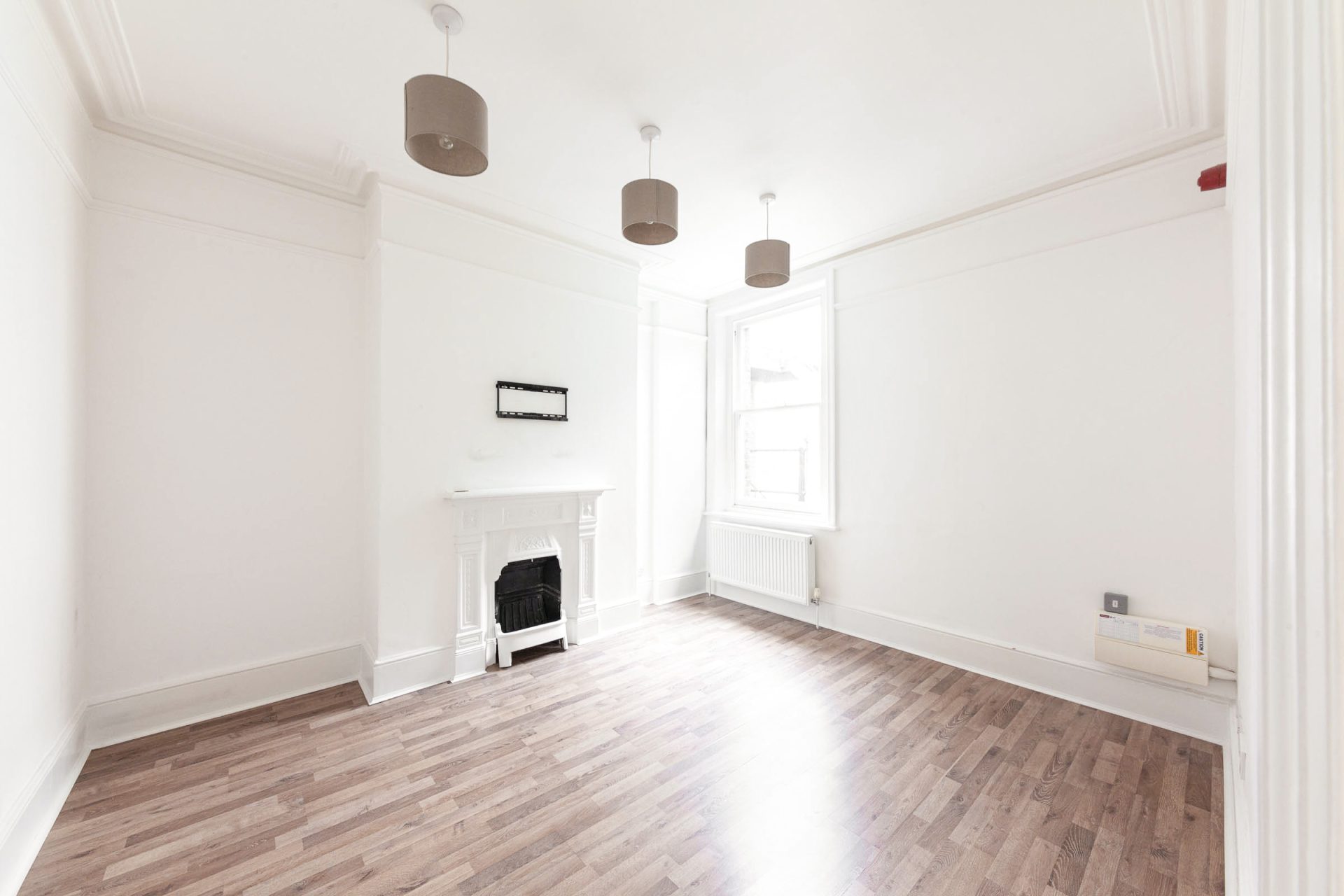
An office should give your team enough room to work, provide the facilities they use every week and sit in a location that people can reach without unnecessary travel. Once the space starts creating problems with capacity, meetings, recruitment or operating costs, it may be time to move office rather than keep adapting a workplace that no longer matches the business.
Moving too late can also restrict your choices. Finding the right office, arranging viewings, negotiating lease terms and preparing the new workspace all take time. Starting the search early gives more opportunity to compare different options and choose a space that suits the business instead of making a rushed decision.
The signs below will help you decide when an office move makes practical and financial sense to your business.
First, watch out for your moving timing
Once you have decided to start an office move, the next question is when to schedule it.
There is no single best month for every business, but some periods are generally easier than others.
| Period | Office-move disruption risk | Why |
|---|---|---|
| Jan | 🟡 | New-year planning and budgets |
| Feb | 🟢 | Often operationally normal |
| Mar | 🟡🔴 | 31 March year-end for some businesses |
| Apr | 🟢🟡 | New financial year for some organisations |
| May | 🟢 | Often a good operational window |
| Jun | 🟢 | Generally lower disruption |
| Jul | 🟡 | Summer holidays begin |
| Aug | 🟡🔴 | Staff holidays can make coordination difficult |
| Sep | 🟢 | Teams generally return after summer |
| Oct | 🟢 | Often a strong operational period |
| Nov | 🟡 | Budgeting and strategy season for some businesses |
| Dec | 🔴 | Christmas, year-end and annual leave |
The most important thing is to check your business calendar before choosing a moving date. Before agreeing on the timing of your office relocation, review:
- Financial year-end: Avoid periods when finance teams are closing accounts, preparing reports or supporting audits.
- Peak trading periods: Your quietest moving period will depend on your industry. Avoid relocating during the weeks when disruption is most likely to affect revenue or client delivery.
- Major projects and client deadlines: Product launches, pitches, tenders and large project deadlines can make an office move unnecessarily difficult.
- Annual leave: Check that the people responsible for IT, operations, HR, facilities and the move itself will be available.
- Lease dates: Your preferred business window still needs to fit around notice periods, break clauses, lease expiry and the time required to prepare the new office.
Key signs that tell you when to move your office
1. Your team has outgrown the available space
A growing headcount is one of the clearest signs that your current office may no longer work. Look beyond the number of desks and check what happens during your busiest office days, particularly when people struggle to find meeting rooms, take calls in shared areas or work from spaces that were not designed as desks.
You should also consider your recruitment plan before adding more furniture. If you have 25 people today but expect several new hires during the next year, squeezing more desks into the existing floor may solve the problem for a few months but create another relocation soon afterwards.
Instead, you should calculate the number of people who actually attend on your busiest days, then allow for realistic growth, or look at larger refurbished space within the same portfolio (1) if your headcount is genuinely outgrowing the building. This gives you a better office requirement than simply using your current headcount.
2. You are paying for space your team rarely uses
Too much space can be just as expensive as having too little. Hybrid working (2) may leave rows of desks unused for several days each week, while your rent, business rates and other occupancy costs continue regardless of how many people are present.
Start by reviewing attendance for a normal working month. A business with 40 employees does not automatically need 40 permanent desks if only 20 to 25 people regularly attend at the same time.
Another way is to check how different areas are actually used. You may find that large desk areas remain empty while smaller meeting rooms and phone spaces are consistently booked, which suggests the office layout no longer matches how your team works.
3. Meeting rooms have become a daily problem
Meeting room availability provides a useful measure of whether an office still works. If people regularly postpone calls, take client meetings in unsuitable spaces or spend time searching for an available room, the problem affects more than convenience.
Before deciding that a larger office is necessary, track meeting room bookings for at least two to four weeks. During the busiest hours of the day, record how often meeting rooms are fully booked, how many private calls require quiet spaces, and whether teams struggle to find available rooms.
If meeting rooms are consistently occupied for more than 80% of peak hours or employees regularly wait for space, the layout may no longer match current needs.
In many cases, the better solution is simply choosing a different mix of desks, meeting rooms, private offices and collaborative areas rather than leasing a larger office. Medialab Group expanding within The Langham Estate (3) is a real example of a tenant growing into more space without a full relocation.
4. Your lease is approaching its end
A lease expiry or break date gives you a natural opportunity to review the office instead of automatically renewing it. Start by checking the lease well in advance, as notice periods for commercial offices often range from 3 to 6 months, while some long-term leases require 6 to 12 months’ written notice to end the tenancy or exercise a break clause.
Since relocating an office can also take several months for property searches, negotiations, legal work and fit-outs, waiting until the last minute may leave too little time to secure a better space.
For this reason, you should read your current agreement before you begin looking at properties. Then, confirm the expiry date, break clauses, notice requirements and any responsibilities for returning the office to its required condition.
5. Your current office costs more than the value you get from it
Increasing rent does not automatically mean you should move, but it should trigger a proper review of what you receive for the money.
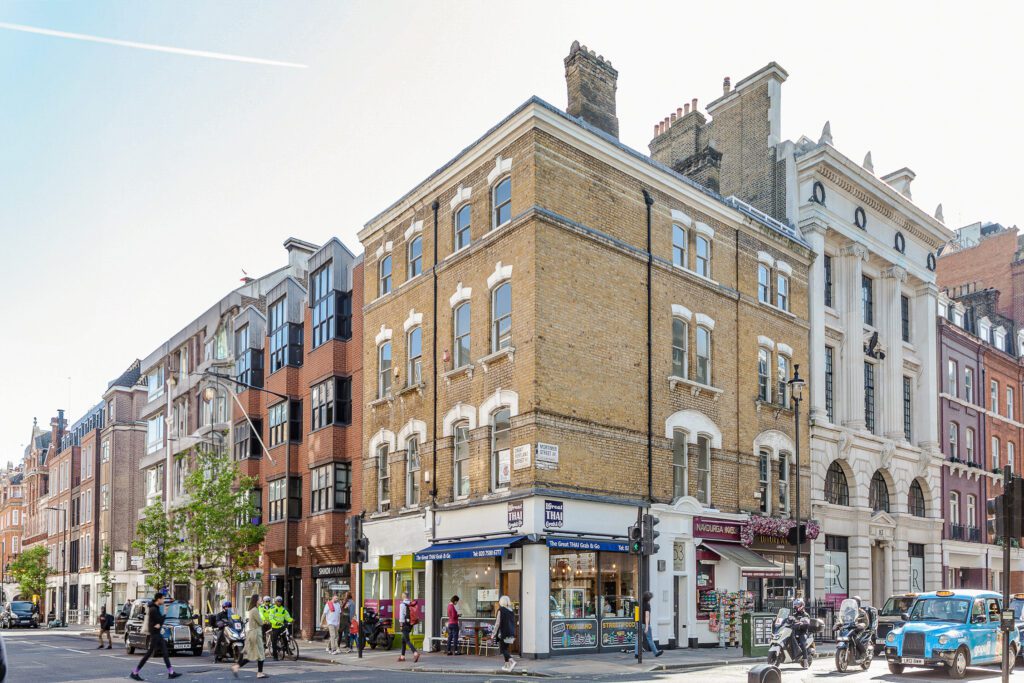
Landlords often raise rent because demand across the West End office market is holding up (4), not because your specific space has improved, so the increase alone tells you nothing about whether you’re getting value.
Compare your total monthly cost against the space your team uses, meeting room availability, internet, cleaning, reception, maintenance and other services you currently pay for separately.
The same calculation should be applied to every new office. A lower headline rent may become more expensive once you add business rates, service charges, furniture, utilities, broadband, cleaning and fit-out costs.
A practical comparison is to calculate one monthly occupancy figure for each option. Compare the total monthly cost after including every regular office expense, rather than looking at rent alone, to avoid underestimating the true cost of the office.
6. The location makes commuting harder than it needs to be
Your office can have enough space and still be in the wrong place. Long walks from stations, limited transport options or a location far from where most employees live can make office attendance harder and create problems when you recruit.
Review employee journeys before choosing another location. You do not need everyone’s exact home address, but postcode areas can help you compare travel times to potential offices and identify the stations used by most of your team.
Client travel matters as well. Businesses that hold frequent face-to-face meetings should check how easily visitors can reach reception using major rail and Underground connections rather than selecting a postcode for its reputation alone.
7. Recruitment is becoming harder because of the office
As mentioned above, a difficult commute can discourage candidates from accepting a role. However, recruitment can also be affected by the workplace itself. Limited meeting rooms, outdated facilities, inflexible office layouts or a lack of collaborative spaces may create a poor impression during interviews and suggest the business is not equipped to support future growth.
Feedback from recent hires and recruitment teams can help identify recurring concerns about the office or workplace experience. If the same issues are raised repeatedly, they provide strong evidence that the next office should address more than just its location.
8. Your team’s working pattern has changed
A workplace designed for five full office days may not work efficiently after a business moves towards hybrid working. You may now need fewer fixed desks but more meeting rooms, quiet areas and spaces where teams can work together on the days they attend.
Review how people use the office rather than trying to preserve the existing layout. A company that has reduced its weekly office attendance may be able to move into a smaller private office while gaining access to shared meeting rooms and breakout areas elsewhere in the building.
Instead of following the same office model simply because it worked several years ago, choose a space that matches your current attendance and the way your teams now work.
9. Your business needs more flexibility
Headcount can change faster than a traditional office agreement. Growth may require another room or a larger suite, while a change in working policy can leave your business paying for desks you no longer need.
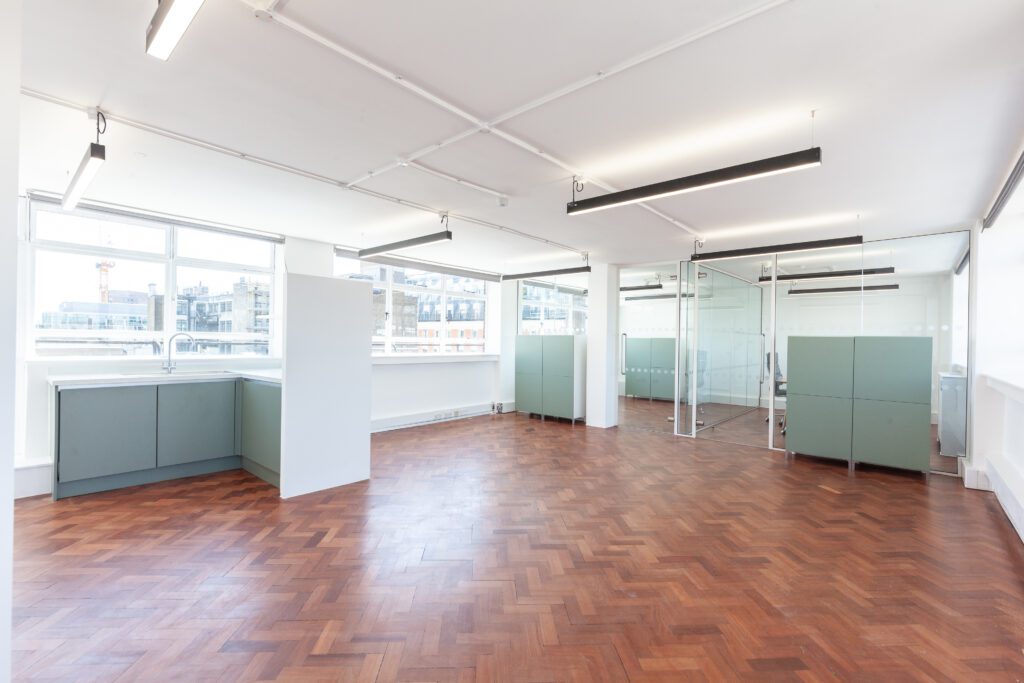
Flexible and serviced offices can reduce this problem because the space is already furnished and much of the day-to-day operation is managed by the provider.
Traditional office leases in London often require a commitment of 3-10 years, whereas many flexible offices offer monthly rolling agreements or contracts lasting around 12-24 months. This allows you to adjust your business’ workspace with far less long-term risk.
Before signing the next agreement, check how easily the office can adapt if the team grows or shrinks. It is also worth confirming whether a move to a larger or smaller office within the same building is possible and how much notice would be required.
10. The building is limiting your technology
Slow internet, unreliable mobile reception or insufficient power can become costly when your business depends on video calls, cloud platforms and large file transfers. Regular complaints about connectivity should therefore be treated as an operational problem rather than a minor office inconvenience.
Test the technology before signing for another space. Connect several devices, make a video call and ask what internet connection reaches the individual office rather than relying on a general building speed.
Security should also be checked. Confirm how people enter outside reception hours, how visitors are managed and what support is available when there is a connectivity problem.
How far in advance should you plan an office move?
For a typical office move, start planning 3–6 months in advance. Larger or more complex moves may need 6–12+ months.
A rough timeline would be:
- 6–12 months: Large company, major renovation, long lease negotiations, or complicated IT/infrastructure.
- 3–6 months: Typical small-to-medium office move.
- 1–3 months: Possible for a small, straightforward move, but you’ll have less room for problems.
- 2–4 weeks: Usually only realistic for a very small office with minimal equipment.
Key things to plan early are lease/landlord requirements, the new space, budget, movers, IT/network setup, furniture, employee communications, and business continuity.
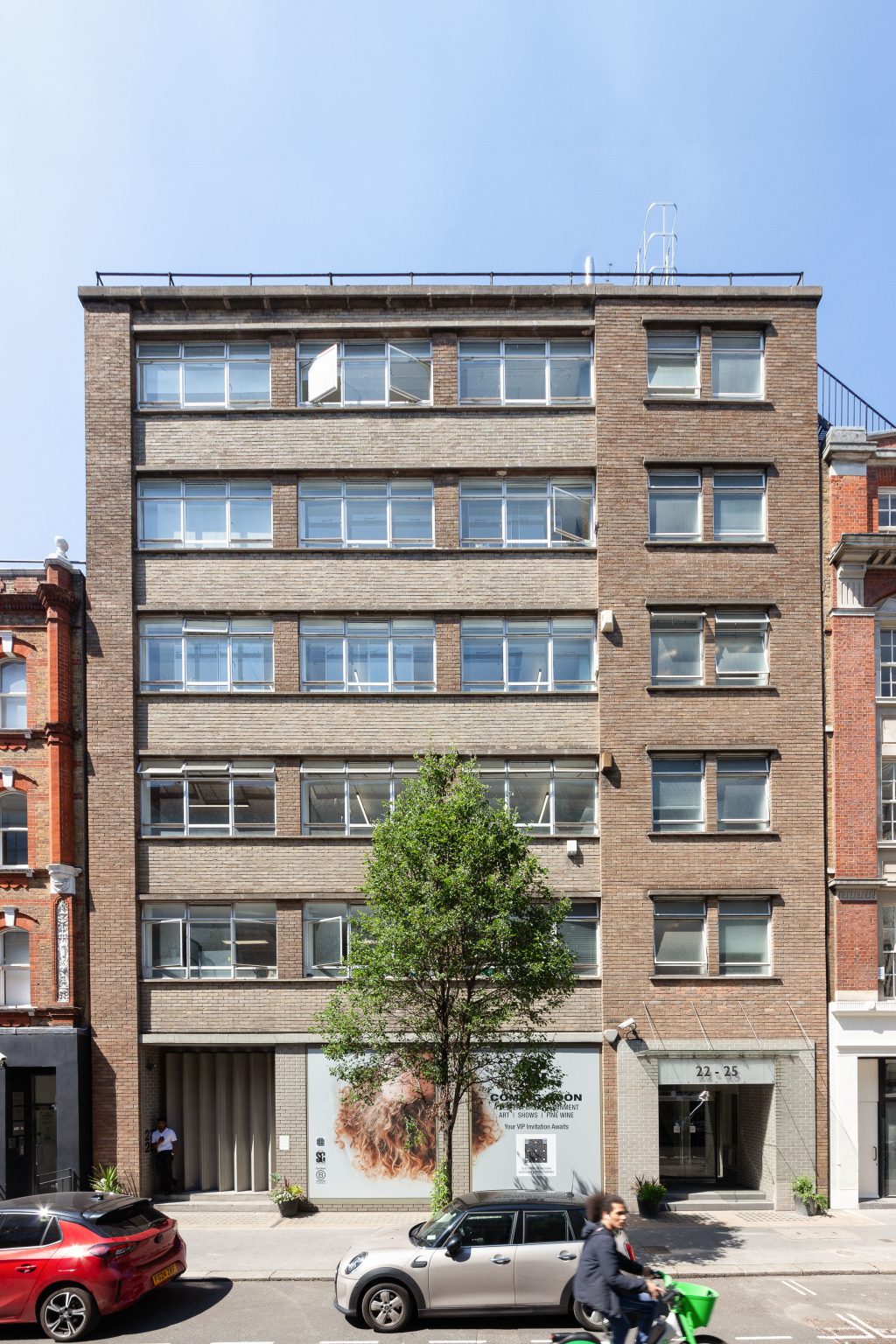
Find a workspace that grows with your business
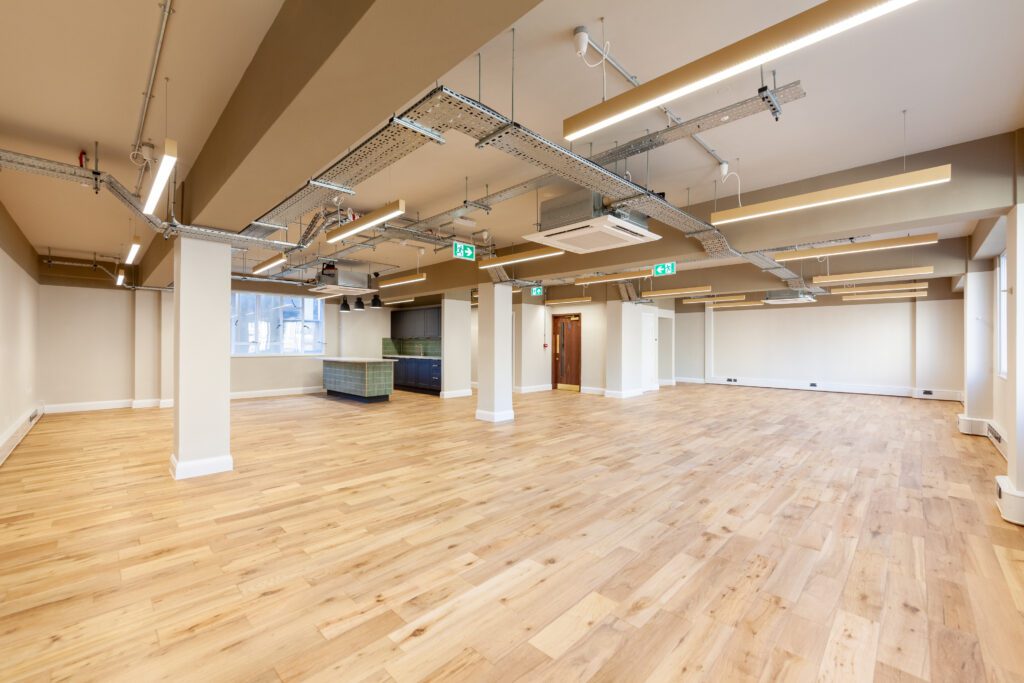
Whether your team needs more room, a better location or a workspace that reflects how you operate today, The Langham Estate offers a wide range of office spaces across Fitzrovia, from fitted and serviced suites to larger offices that can be tailored to your business. With properties of different sizes in one well-connected neighbourhood, it’s easier to find a workspace that fits your current needs while leaving room for future growth.
References:
1. The next wave of office refurbishments completes at The Langham Estate
2. How to design a hybrid office that works for everyone
3. Medialab Group expands within the Estate
4. Strong demand continues across the West End office market
5. Peter Alexander picks Fitzrovia for their UK headquarters