What’s The Ideal Footfall for a Shop in Central London?
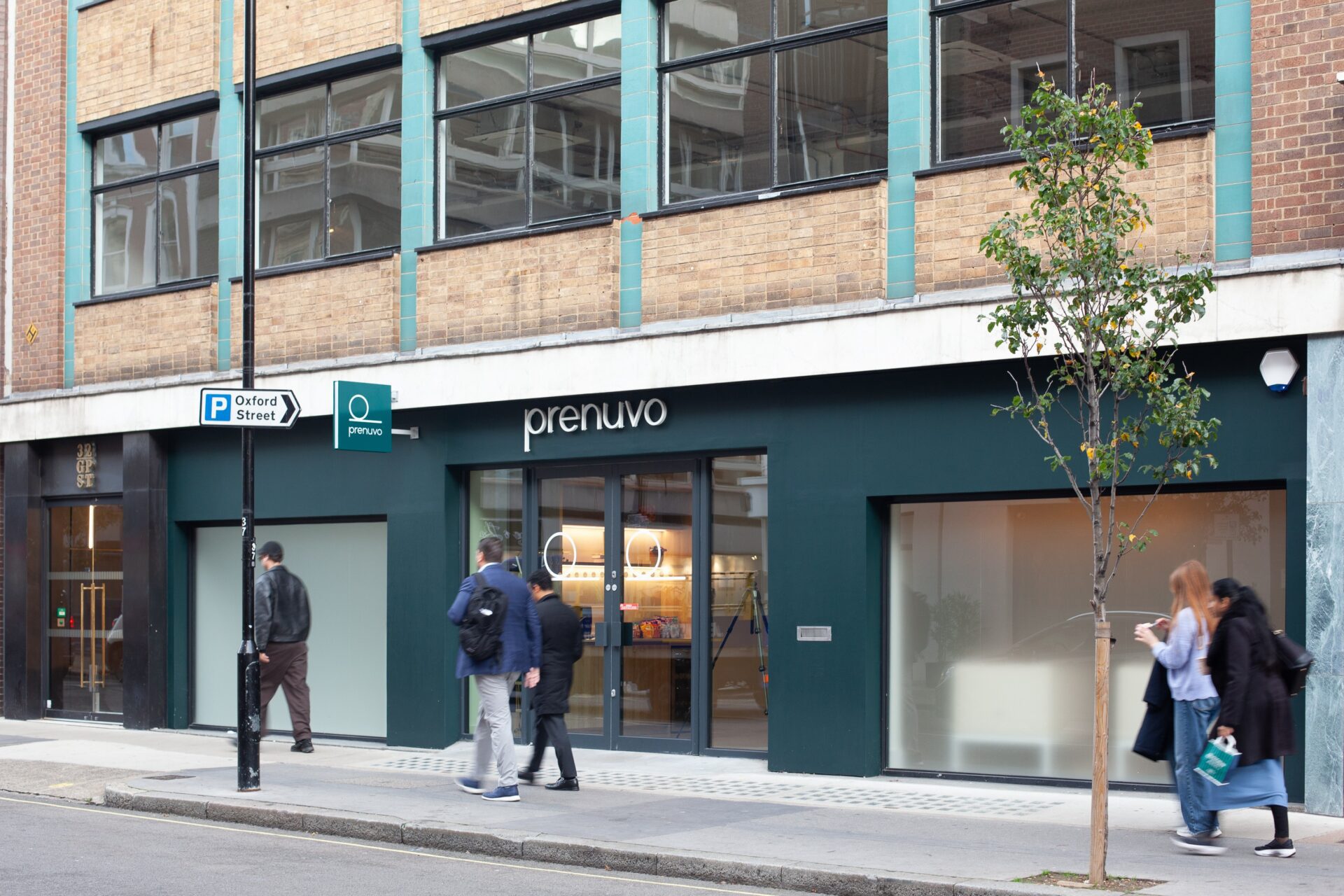
A busy street can look like the perfect place for a new shop, but high footfall does not automatically mean high sales. What matters is whether the people passing your door are the right customers for your business, whether they are there at the right times, and whether the location can generate enough sales to justify the rent.
In this guide, we share what good footfall means for different types of shops, how to estimate the footfall your business actually needs, and practical ways to attract more people when opening a new store.
Potential areas for the best footfall in Central London?
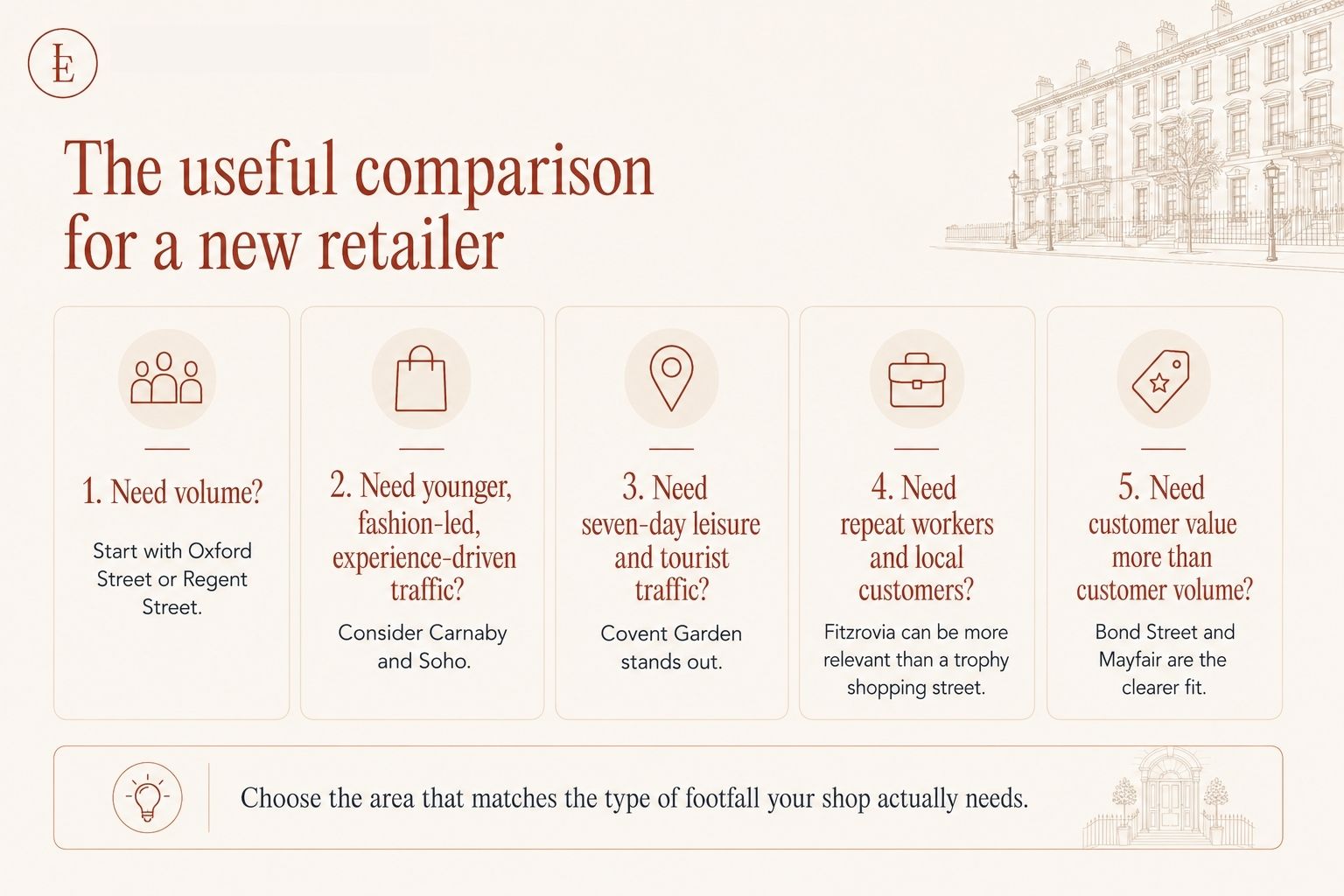
Central London has several strong retail locations, but the busiest street is not necessarily the right one for every business. For retailers considering Oxford Street alternatives for retail options, comparing the type of footfall can be more useful than simply looking for the highest visitor count.
1. Fitzrovia
Footfall level: Moderate to high, but more consistent and locally useful than purely tourist-led
Fitzrovia is different from Oxford Street because retailers can draw on a combination of office workers, residents, students and visitors, rather than depending solely on destination shoppers. This mix helps make Fitzrovia one of the best areas in West End for retail shop concepts that rely on repeat weekday custom as well as passing traffic.
A previously published Fitzrovia footfall benchmark recorded around 946,000 visits during 2024 (Source), and The Fitzrovia Partnership now maintains footfall and dwell-time reporting that is refreshed monthly across both the Camden and Westminster sides of the district.
Common shops: Independent boutiques, cafés, restaurants, convenience businesses, beauty and wellness, specialist services and concept-led retail. Closer to Oxford Circus, the mix becomes more fashion and lifestyle-led; Langham Estate’s Great Portland Street portfolio, for example, has attracted larger fashion occupiers alongside independent businesses elsewhere in Fitzrovia.
Typical customers: Office workers, local residents, creatives, students and visitors moving between Oxford Street, Tottenham Court Road and the surrounding neighbourhood.
Best suited to: Independent retailers, cafés, beauty and wellness, specialist shops and businesses that benefit from repeat weekday customers, rather than relying entirely on tourist volume.
2. Oxford Street & Oxford Circus
Footfall level: Very high
Oxford Street remains the obvious starting point if sheer exposure matters. It attracts more than 500,000 visitors a day, with the decision to make this street become pedestrian-only has helped produce a 45% week-on-week increase in footfall. Plans to pedestrianise a major section of Oxford Street have continued through 2026.
Common shops: Large fashion retailers, department stores, beauty, footwear, jewellery, technology and flagship stores. Selfridges and John Lewis remain major anchors, while established retailers continue to invest in larger and upgraded formats.
Typical customers: A broad mix of Londoners, domestic shoppers, international tourists and younger weekend visitors.
Best suited to: High-street fashion, beauty, technology, large-format stores and brands where awareness and visibility are important.
Footfall level: High, with strong leisure and evening activity
3. Carnaby & Soho
Carnaby and Soho work differently from a traditional shopping street because people come for shopping, eating, drinking and entertainment together. Shaftesbury Capital describes Carnaby and Soho among its high-footfall West End destinations; across its Covent Garden, Carnaby/Soho and Chinatown portfolio, annual footfall is approximately 150 million, with around 70% coming from UK visitors (Source).
Common shops: Contemporary fashion, beauty, streetwear, digital-native brands, lifestyle concepts and independent retailers, supported by a large F&B scene. In 2026, Carnaby/Soho added or signed brands including Edikted, Kookaï, K-Way, Eme Studios and Sephora, reinforcing its fashion-and-beauty positioning.
Typical customers: Younger shoppers, fashion-led consumers, tourists, creatives and people visiting Soho for food, drinks or nightlife.
Best suited to: Fashion, beauty, streetwear, lifestyle, pop-ups, experiential retail and brands with a strong social or digital following.
4. Regent Street
Footfall level: Very high, with a more premium customer profile
Regent Street attracts more than 57,000 visitors a day, according to The Crown Estate. Its position between Oxford Circus and Piccadilly Circus gives retailers access to tourists, London shoppers, office workers and residents while maintaining a more premium retail environment than many mass-market high streets.
Common shops: Premium fashion, lifestyle, beauty and established international flagships. Recent investment illustrates the mix: Antler opened on Regent Street in April 2026, while brands around the wider Regent Street estate include Burberry, Barbour and Mulberry; SKIMS has also chosen Regent Street for its first permanent UK flagship.
Typical customers: Tourists, affluent London shoppers, workers and shoppers already moving between Oxford Street and the wider West End.
Best suited to: Premium fashion, beauty, lifestyle and brands looking for a high-profile London flagship
5. Bond Street & Mayfair
Footfall level: Strong, but footfall quality matters more than maximum volume
Bond Street is not really an Oxford Street-style volume play. It positions itself as London’s luxury-shopping destination, with a concentration of high-end fashion, jewellery and watch brands including Cartier, Bulgari, Chanel, Dior, Gucci, Louis Vuitton, Tiffany & Co., Patek Philippe and Van Cleef & Arpels.
Investment from luxury brands remains strong in 2026. Hermès opened a major new five-floor London Maison on New Bond Street in June, while RH opened a five-floor Mayfair gallery close to Bond Street and Savile Row later that month (Source).
Common shops: Luxury fashion, watches, fine jewellery, leather goods, premium beauty, art galleries and high-end interior/design concepts.
Typical customers: Affluent Londoners, international luxury shoppers, collectors and visitors coming to Mayfair specifically for premium shopping, hotels, dining and art.
Best suited to: Luxury fashion, jewellery, watches, premium beauty and brands where spend per customer matters more than raw pedestrian numbers.
What is a good footfall for different types of shops?
“Footfall” is often difficult to understand in practice because numbers like “10,000 people per day” are too abstract to visualise.
A simple way to make it tangible is to stand outside the shop and count everyone passing the frontage for 5 minutes. Then use this cheat sheet to quickly understand what that number means in practice.
- Only a handful pass (<300/day equivalent): Quiet
- People passing regularly, gaps between groups (~300–1,000/hour): Decent
- Constant stream, but pavement isn’t crowded (~1,000–2,000/hour): Busy
- People continuously passing / pavement feels busy (~2,000–3,000/hour): Major pedestrian flow.
Applying the “5-minute” test, here are a benchmark for different types of shops in Central London:
- Coffee / bakery: 100–150+ is good
- Takeaway / fast food: 100–150+ is good
- Fashion: 150–200+ is good
- Convenience: 150–200+ is good
- Beauty / cosmetics: 75–100+ is good
- Restaurant: 50–100+ is good
- Barber / salon: 50+ is usually enough
- Luxury / jewellery: 50–100+ can be good if the footfall is high quality
- Tourist / souvenir: 200–250+ is preferable
- Professional services: 25–50 can be sufficient
Best practical approach: do the 5-minute count three times – lunchtime, late afternoon, and evening – and use the average. This gives you a much better feel for the location than relying on a quoted “daily footfall” number.
How much footfall does your shop actually need?
There is no single footfall number that makes a Central London shop viable. The more useful approach is to work backwards from how much your shop needs to sell, then estimate how many people need to pass the door to generate those sales.
For example, imagine a shop wants to generate £60,000 per month and trades 26 days:
- Daily sales target: about £2,310
- Average customer spend: £40
- Transactions needed: about 58 per day
- If 30% of people entering make a purchase: about 193 store visitors
- If 8% of passers-by enter: about 2,400 people need to pass the shop each day
So in this example, roughly 2,400 relevant passers-by per day would be a useful starting benchmark – not because 2,400 is universally “good”, but because it supports this particular shop’s sales target. If the costs of shop rental are substantially higher in one location, that shop may need either more footfall, a higher conversion rate or a higher average spend to make the location worthwhile.
For a Central London location, test the calculation using more than one trading period. A Fitzrovia shop may depend heavily on weekday lunchtime and after-work traffic, while a Covent Garden retailer could rely much more on weekends and leisure visitors.
Ways to maximise footfall for new shop openings
1. Create a “3-second storefront”
A passer-by should understand three things almost instantly:
- What is this business?
- What do they sell?
- Why should I go inside?
For example:
- FRESH BAKERY
- Baked fresh every morning
- 10% OFF TODAY
Avoid covering the facade with too much text.
2. Create a “photo moment”
Give customers a reason to photograph the shopfront.
It could be:
- A distinctive door
- A colourful facade
- A branded installation
- A clever window design
- Seasonal artwork
- A memorable phrase
Then encourage customers to tag the business.
3. Make opening day an event
Give people a reason to come now, rather than “sometime later.”
- Limited-time opening discounts.
- First 50/100 customers get a gift.
- Buy-one-get-one or bundle offers.
- Product demonstrations, tastings, mini-events, music, games, or photo opportunities.
- Invite local creators/influencers for an opening-day preview.
- Turn every visitor into another visitor
4. Create a simple referral mechanism
“Bring a friend and you both get ___.”
You can also give customers a coupon for their next visit, rather than only discounting the first purchase.
5. Create local partnerships
Cross-promote with complementary businesses in the same neighbourhood. For example:
- Café + bookstore
- Gym + healthy-food shop
- Salon + clothing boutique
- Children’s shop + family restaurant
Give each other’s customers a small, trackable offer.
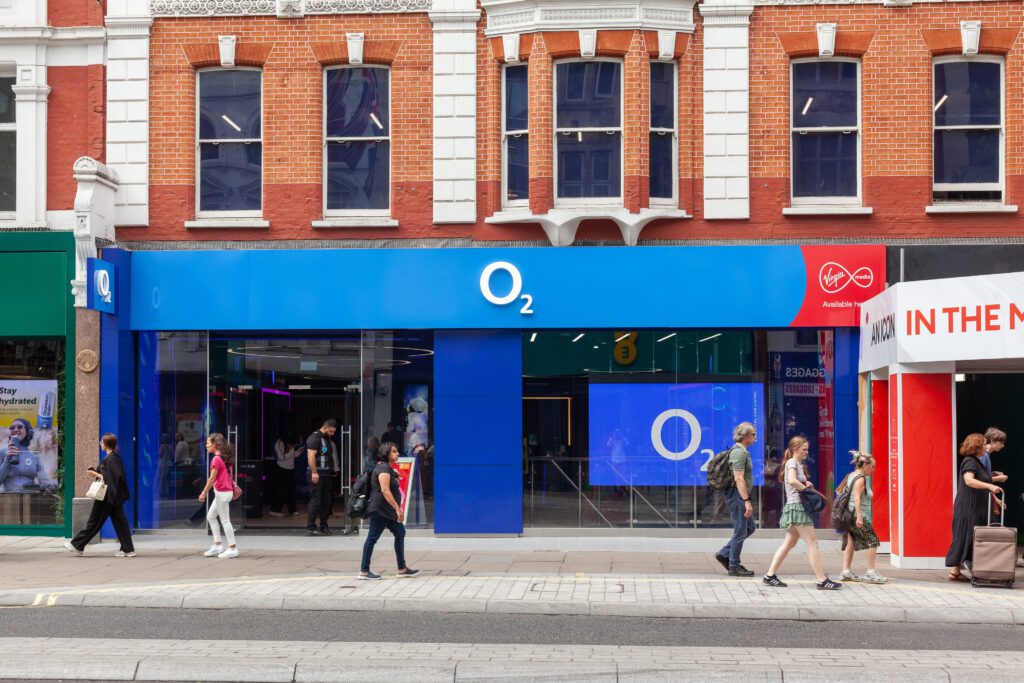
Find a shop in a high-footfall Central London location?
The right shop is not always on the busiest street. What matters is finding a location where footfall, customer profile, visibility and occupancy cost all work for your business.
The Langham Estate has retail spaces across Fitzrovia and the wider West End, including streets close to Oxford Circus, Oxford Street and Tottenham Court Road. Our professional agents can help you compare available units and assess whether the location suits the way your shop trades.