Getting ahead of Renters’ Rights Act: How this introduction leads to risk reduction for landlords

Main objective of the Renters’ Rights Act
The Renters’ Rights Act is the new law introduced and granted Royal Assent on October 27th, 2025, aiming to make structural changes to the Private Rented Sector, particularly for renters. Once the law is implemented and the changes come into practical effect from 1 May 2026, tenants will benefit from standardised rental practices, supported by local council enforcement and clearer legal oversight.
According to UK law, key factors from this bill include:
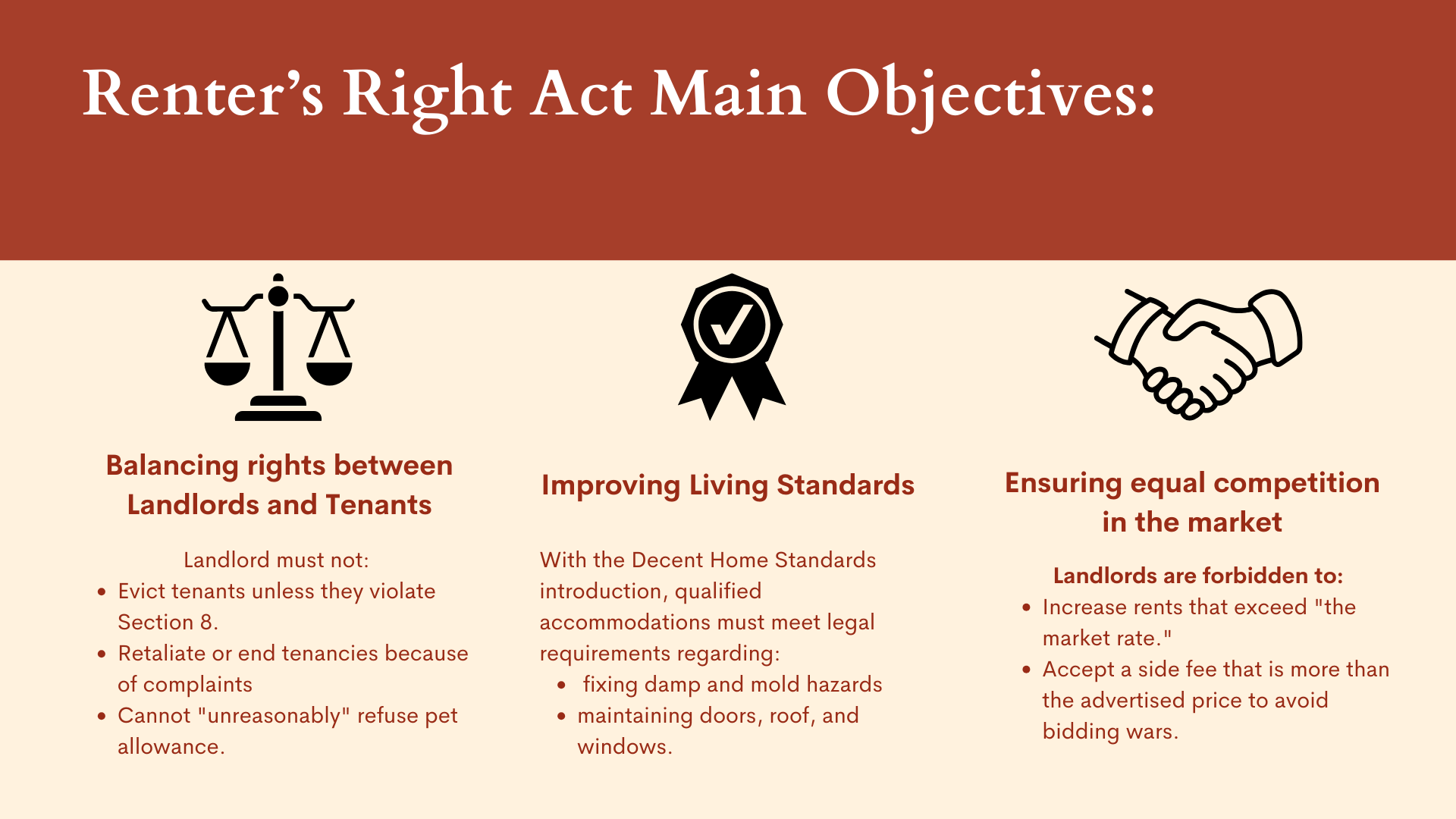
- Balancing rights: The Act aims to strike a balance between tenants and landlords by introducing clear tenancy enforcement rules, ensuring fairness and transparency.
- Improving standards: Setting minimum property standards ensures that rented properties meet safety and habitability requirements, strengthening confidence in the responsible landlord framework.
- Ensuring affordability: Landlords will not be able to accept offers over the advertised asking price, and rent increases will be limited to once per year, supporting predictable market behaviour under London rental law reform.
With the upcoming changes, there are some key dates that both parties should keep in mind:
- January 2026 – Draft tenancy agreement available
- March 2026 – Tenant communications and guidance
- April 2026 – Final deadline for landlords to serve a Section 21 notice
- May 31, 2026 – All landlords must send communications to tenants by this date
Two main phases of conducting the Renters’ Rights Act
With this introduction, the residential tenancy reform aims to support over 11 million tenants in the UK, protecting them from retaliatory practices and market fluctuation. The reforms will be delivered in two main phases, beginning on May 1, 2026, and continuing into late 2026. The next phase will be introduced no later than 2035, according to the Government.
Phase 1 (Starting from May 1, 2026)
- Tackling discrimination and financial exploitation. By 2026, fixed-term tenancies will automatically convert to periodic tenancies, providing flexibility while simplifying tenancy structures under standardised rental practices.
- By May, section 21 abolition will take full effect, meaning landlords will no longer be able to use no-fault evictions. Instead, possession must be sought using Section 8 Grounds of Possession, reinforcing clear tenancy enforcement rules and legal certainty.
- The Decent Homes Standard will also be legally applied to the private rented sector, requiring properties to be free from serious health and safety hazards. By 2035, the government says private and social landlords will need to meet the Decent Homes Standard (DHS).
Phase 2 (Beginning in Late 2026)
- Introduces the Landlord Ombudsman and a new PRS Database. These tools allow both landlords and tenants access to relevant historical data that may affect tenancy agreements.
- Mandatory participation in the Landlord Ombudsman scheme provides a structured alternative to court proceedings, helping to reduce disputes and supporting risk reduction for landlords.
Why It Is Important for Landlords to Stay Updated
While much of the discussion around the Renters’ Rights Bill focuses on tenant protections, the legislation also introduces several changes that can benefit landlords operating within a responsible landlord framework. The Act promotes legal clarity, market stability, and long-term risk reduction for landlords.
1. Clearer legal framework brings greater certainty
The removal of repeated renewals simplifies tenancy management and reduces ambiguity around contract end dates. For landlords, this clarity supports lawful decision-making and reinforces clear tenancy enforcement rules, helping avoid accidental non-compliance.
2. Stronger, fairer grounds for regaining possession
Although the Act removes no-fault evictions through section 21 abolition, it strengthens legitimate possession grounds under Section 8. These include selling the property, moving in, rent arrears, and certain HMO circumstances, providing landlords with legally defined routes to regain possession.
3. Predictable rent increase rules support market stability
Rent increases will be limited to once per year and must reflect market conditions. This provides landlords with a clear benchmark to respond to challenges, supporting predictable income and risk reduction for landlords.
4. Ending rental bidding encourages long-term tenancies
The ban on rental bidding prevents tenants from offering above the asking rent, reinforcing standardised rental practices. While bidding may drive short-term returns, transparent pricing supports longer tenancies and more stable landlord-tenant relationships.
5. Ombudsman and database help reduce disputes
The Private Rented Sector Ombudsman and landlord database provide structured alternatives to court action. Recorded tenancy histories support informed decision-making and further strengthen clear tenancy enforcement rules.
6. Higher standards can lead to better tenants
Improved housing standards encourage tenants to remain longer and care for properties responsibly. This aligns with the responsible landlord framework and reduces turnover-related costs.
Five pieces of advice for landlords preparing for standardised rental ractices
As of the start of May 2026, fixed-term tenants will officially convert to periodic ones, which means they have more powers to challenge their landlords if they think the rent is above the rent market. Therefore, by understanding the rights, landlords can also challenge tenants for a win-win relationship.
1. Be selective with your tenants
Taking time to properly look at prospective tenants could help landlords reduce future issues such as rent arrears or property damage, under protection of Session 8. Thorough referencing, affordability checks, and rental history reviews help landlords build stable, long-term tenancies.
2. Consider applying for a rent guarantee solution
A rent guarantee solution can provide landlords with added financial security by covering missed rental payments in the event of tenant default. In the new law introduction, the government also supports tenants if their rents are due but they might have reasons to be late. Therefore, this solution can be particularly valuable in an unexpected future, helping landlords manage risk while maintaining consistent cash flow.
3. Be transparent about the price on the market
Clear, market-aligned pricing attracts reliable tenants and reduces disputes. Transparency supports compliance with rent increase rules and London rental law reform.
4. Optimise your properties
Well-maintained, compliant properties attract higher-quality tenants and reduce long-term costs. Optimisation aligns with the responsible landlord framework and evolving regulatory expectations.
5. Have written explanation for future tenants
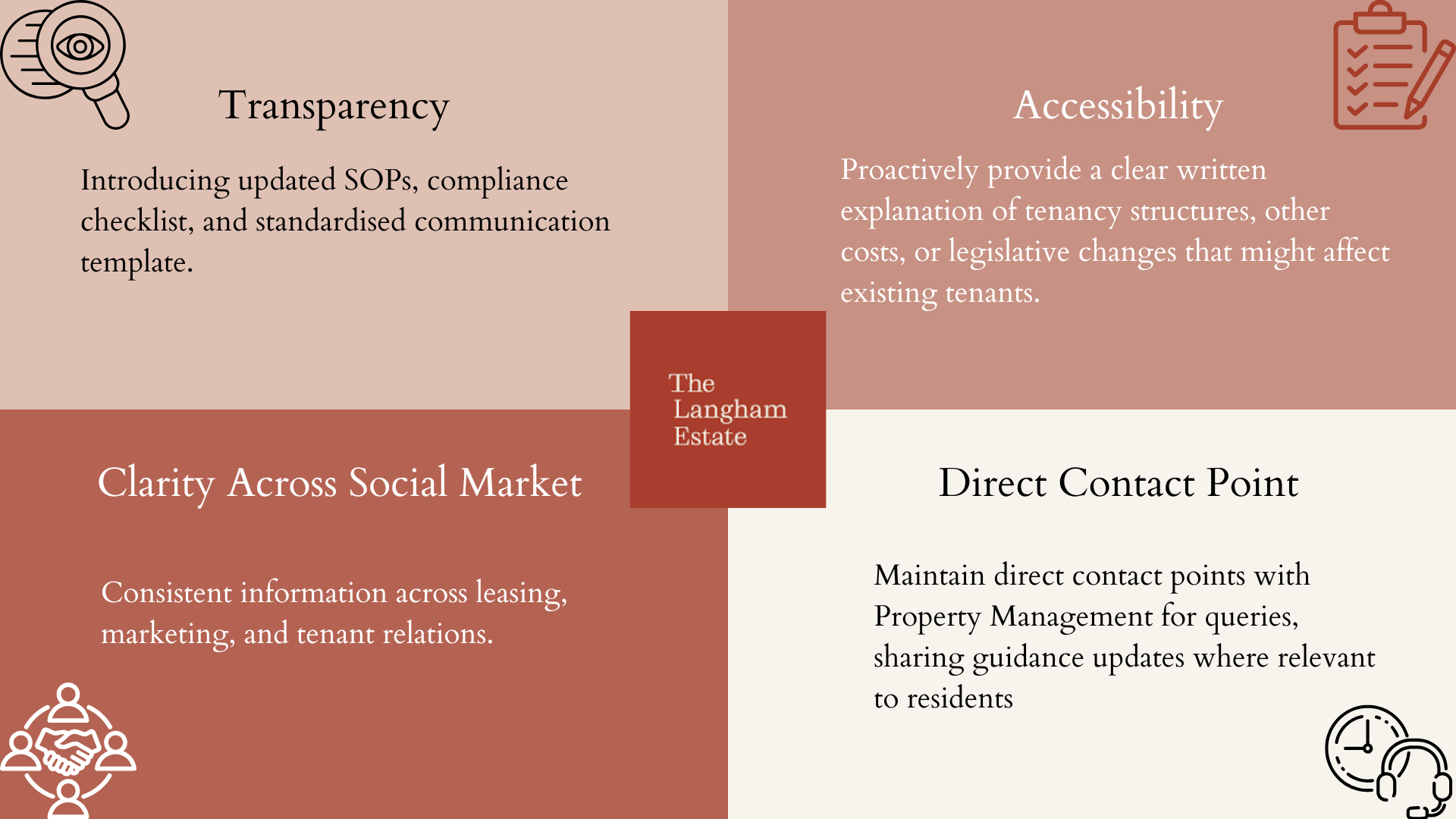
While transparency is a must for the upcoming law introduction, the way landlords treat it shapes how we perceive it – either a regulatory burden, or a long-term companionship with future tenants. Providing a clear written explanation of tenancy structures, as well as other costs or legislative changes that might affect existing tenants show a genuine commitment to maintaining strong, trust-based relationships.
How The Langham Estate help you thrive In Fitzrovia
For businesses looking to embed themselves in Fitzrovia long term, knowing about the renting system matters. This is where The Langham Estate plays a key role. As the principal landlord, The Langham Estate has prepared to follow new regulations, offering offices and retail spaces that strictly adhere to the upcoming regulations, ensuring that both parties will have long-term relationships.
Not stopping there, The Langham Estate also works continuously to maintain direct contact points with Property Management for queries, sharing guidance updates where relevant to residents. The upcoming Act is not a regulatory shift, but an opportunity to reinforce trust, demonstrate The Langham Estate’s commitment to be a responsible management company in Fitzrovia.