Commercial lease rent review: How it works in the UK (with examples)
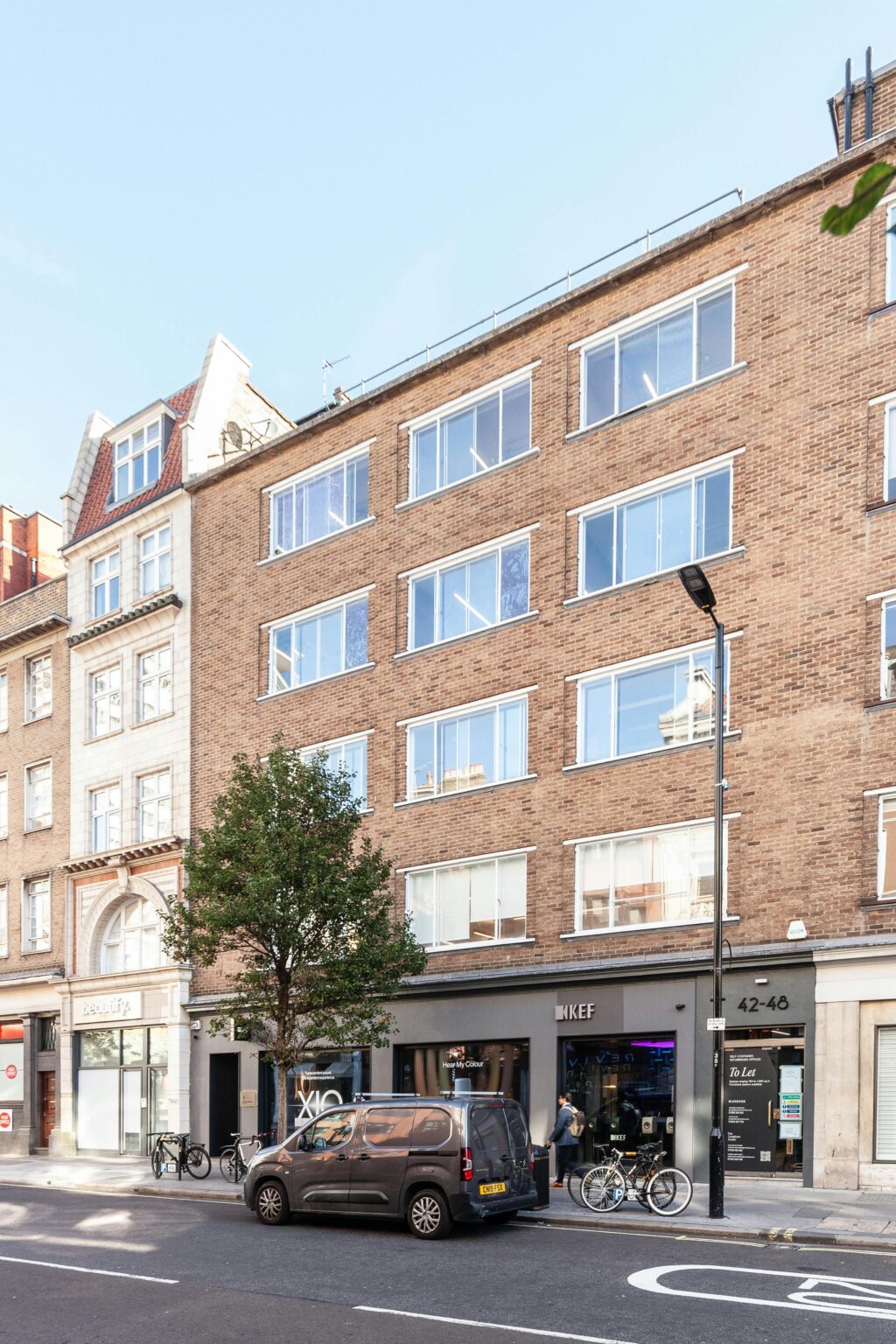
The commercial lease rent review has become a critical mechanism for aligning rental values with current market conditions while safeguarding long-term asset performance.
In this article, we will show you how commercial lease rent reviews operate in the UK, supported by practical examples and clear explanations to help stakeholders navigate the process with confidence.
What is a commercial lease rent review?
A commercial lease rent review is a contractual mechanism that allows landlords to reassess and adjust rent over time. In the UK, reviews typically take place every three to five years, depending on the lease provisions.
Moreover, knowing more about the short-term and long-term office leases (1) can help you protect your properties and your benefits. So how can the landlords know about the commercial lease rent review? Check this process below.
The process of commercial lease rent review
A commercial lease rent review is usually triggered at predefined intervals set out in the lease agreement. Landlords and tenants will negotiate to agree on an updated market rent, often supported by chartered surveyors who assess comparable evidence and valuation benchmarks.
If an agreement cannot be reached, the matter is referred to an independent expert or arbitrator for determination.
Early engagement, clear lease provisions, and well-documented market data are therefore essential to streamline negotiations and minimise the risk of escalation.
Before committing to any rental, make sure you prepare a list of questions to ask before signing a lease (2) so you fully understand the terms and avoid unexpected issues later.
Common rent reviews in the UK
1. Open market rent reviews (OMR)
Open market rent reviews adjust the rent to reflect the market value at the review date, based on comparable evidence and prevailing leasing conditions.
However, many UK leases apply an upwards-only provision, limiting downward adjustments and protecting landlord income, which can increase the likelihood of disputes and professional costs.
Example:
Rent review dates are set out in the lease. For instance, a 10-year lease may schedule reviews in years three, six, and nine. Any revised rent agreed through the review applies from the specified dates.
2. Index-linked rent reviews
Index-linked rent reviews adjust rent in line with inflation, typically referencing the Retail Prices Index (RPI) or Consumer Price Index (CPI). This approach provides predictable increases, improved transparency, and reduced dispute risk.
Example:
For example, the rent may be between 2 and 4 % on the assumption of a usual 3% year-on-year increase. So, in a good year of 5%, the resultant rent increase can only go up to 4%.
3. Turnover rent
Turnover rent is a rental structure commonly used in retail and leisure leases, linked to the tenant’s business performance. It is calculated as a percentage of the tenant’s turnover, either as the sole rent or combined with a minimum base rent.
By this approach, landlords can share in trading success while offering tenants greater flexibility during periods of reduced revenue.
Example:
For example, Store X leases space in Mall Y with a base rent of $4,000 per month, plus 10% of any revenue above $50,000.
In June, the store made $70,000, meaning $20,000 exceeded the threshold. As a result, it pays $4,000 plus $2,000, bringing the total rent to $6,000.
Be aware of the lease provisions that you should know
Careful review of lease provisions is essential before entering a commercial lease rent review. Particular attention to assumptions and disregards within the rent review clause, because it directly affects market rent.
If these elements are ambiguous or poorly defined, they can create misalignment between parties and increase the likelihood of disputes. The early legal scrutiny helps ensure clarity, enforceability, and a smoother review process over the lease term.
Finally, if your office sits in Central London, a well-planned lease renewal in London (3) can help you secure better terms while avoiding unexpected costs.
How to avoid rent review disputes and unexpected costs?
Understanding your lease term is a crucial thing you should know to protect your business. Here are some keys:
- Understand your lease and identify rent review dates – Clearly know about your rent review dates, terms, and dispute resolution processes
- Confirm in writing – You can ask the landlord for written confirmation about the review
- Work with a professional – A professional and experienced agent can help interpret your lease and negotiate fairly with your landlords.
You should have an agency representation to help you navigate your lease and ensure the rental terms. Catching all those keys can help you to manage your space and avoid any unnecessary fees.

Where to find reliance spaces for rent in Central London?
For landlords and investors prioritising long-term value and sustainability, The Langham Estate offers a well-established portfolio in the core of Fitzrovia, one of Central London’s most resilient submarkets.
The estate focuses on high-quality, environmentally responsible commercial space, aligned with evolving ESG expectations and occupier demand. Also, the estate with 1000 square feet of commercial space (4) in London opens a world of opportunities for you and your brand.
Moreover, The Langham Estate provides its portfolio with spans office, retail, leisure, and residential assets, providing flexibility across tenant profiles and investment strategies.
If you are finding a future-ready space in Central London, engaging with an experienced estate such as The Langham Estate can simplify acquisition and leasing decisions while supporting sustainability objectives.
Whether you’re searching for your perfect property, we’d be happy to help. Contact us now!
For landlords and investors prioritising long-term value and sustainability, The Langham Estate offers a well-established portfolio in the core of Fitzrovia, one of Central London’s most resilient submarkets.
The estate focuses on high-quality, environmentally responsible commercial space, aligned with evolving ESG expectations and occupier demand. Also, the estate with 1000 square feet of commercial space (4) in London opens a world of opportunities for you and your brand.
Moreover, The Langham Estate provides its portfolio with spans office, retail, leisure, and residential assets, providing flexibility across tenant profiles and investment strategies.
If you are finding a future-ready space in Central London, engaging with an experienced estate such as The Langham Estate can simplify acquisition and leasing decisions while supporting sustainability objectives.
Whether you’re searching for your perfect property, we’d be happy to help. Contact us now!