How long should my commercial lease be?
The average commercial lease length is a critical consideration for businesses evaluating new premises. Lease duration influences financial commitments, operational stability, and long-term strategic planning. Selecting the right term requires balancing security of tenure with the flexibility to adapt to changing market conditions.
Typical commercial lease lengths by property type
Commercial lease lengths vary significantly depending on the property’s use and the occupier’s needs.
For office leases, the lengths have shifted over time, but in London, currently:
- Traditional longer leases: Often 5–10 years with break clauses; this has been typical for established businesses making a longer commitment.
- Medium-term market: 3-5 years leases are increasingly common, especially among SMEs and flexible office demand.
- Flexible/serviced/coworking: Shorter terms of 12–24 months are now common for flexible workplaces, and some coworking arrangements can be as short as monthly.
For retail leases (including shops or high-street stores such as Oxford St, or Regent St):
- Typical retail lease term: Often 5–10 years on a fixed term.
- Some major high-street flagship tenants: agree to 10-15 years or more, but shorter leases (3–5 yrs) have become more common with smaller operators.
Overall, the trend across London’s commercial property market is clearly towards shorter and more flexible lease structures, especially in the office sector and increasingly within retail following the pandemic.
At The Langham Estate, this shift towards flexibility is reflected in our commercial offering. We provide a spectrum of leasing options across our Fitzrovia portfolio, ranging from flexible and plug-and-play office suites to more traditional long-term leasehold arrangements. This enables businesses at different stages of growth.
Short-term vs long-term commercial leases: What’s the trend and why?
The structure of commercial leases in the UK is evolving. While flexibility remains important, recent data indicate a renewed shift towards greater term stability. According to the United Kingdom State of CRE Leasing Report 2024, leases of 3-5 years increased by approximately 69%, and agreements of 5-10 years rose by 28%. This suggests that many occupiers are recalibrating their approach to balance agility with long-term certainty.
One of the key drivers behind this shift is the maturation of hybrid working models. Rather than reducing their physical footprint entirely, many organisations are consolidating into higher-quality, well-located spaces and committing to them for longer periods. A stable lease provides continuity for employees who divide their time between home and the office, while also reinforcing company culture and operational consistency.
The length of a commercial lease based on business needs
Determining the appropriate average commercial lease length ultimately depends on your company’s operational priorities, financial strategy, and growth trajectory. Rather than defaulting to market norms, businesses should assess lease duration through a strategic lens.
Business size and growth plans
Early-stage or scaling businesses often prioritise flexibility to accommodate headcount changes, restructuring, or expansion into new markets. Shorter or mid-term leases with break options can reduce long-term exposure. In contrast, established organisations with predictable growth patterns may favour longer leases to secure location stability and negotiate stronger commercial terms.
Fit-out investment and capital expenditure
Where significant capital is allocated to bespoke fit-outs, branding, or technical infrastructure, longer lease terms typically provide better value. A longer commitment allows companies to amortise fit-out costs over time and justify higher upfront investment in workplace quality and sustainability features.
Market conditions
In tenant-favourable markets, businesses may secure competitive rents and incentives while retaining flexibility. In tighter markets, longer leases can be advantageous to lock in pricing and secure prime space before supply becomes constrained. Monitoring rental trends and vacancy levels is, therefore, essential when deciding lease length.
Landlord versus tenant leverage
Lease negotiations are shaped by bargaining power. Strong covenant tenants may secure flexible structures even on longer agreements, including rent reviews, expansion rights, or break clauses. Where landlord leverage is stronger, longer terms may be encouraged in exchange for incentives such as rent-free periods or capital contributions.
In practice, the optimal lease length is not simply about duration, but about aligning contractual commitment with business strategy, financial planning, and market positioning.
Flexible workspace solutions and lease length choices in Fitzrovia
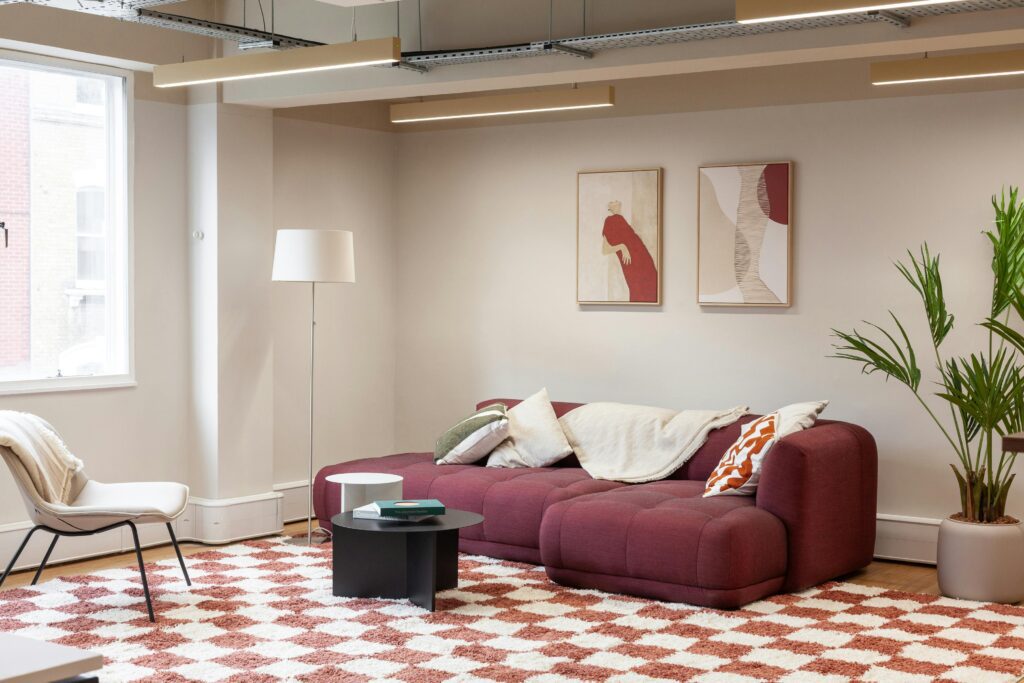
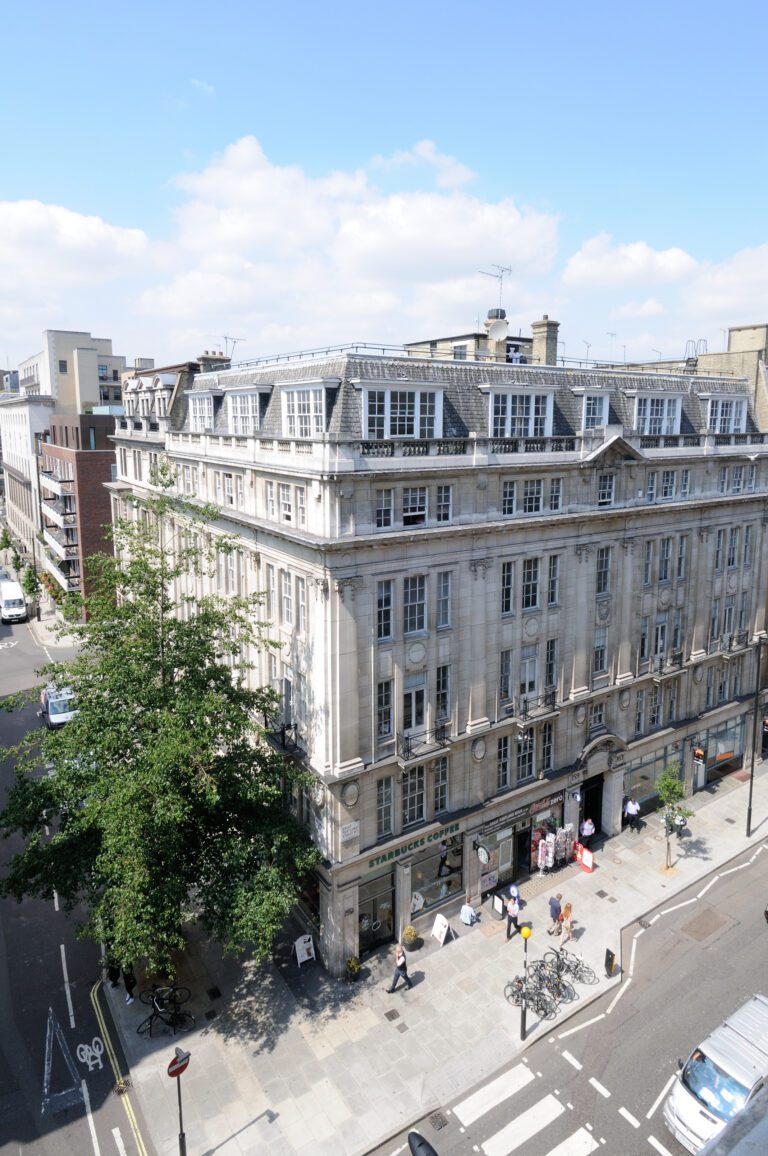
In Fitzrovia, lease length decisions are closely linked to the type of workspace solution a business selects. The Langham Estate offers a diverse portfolio of commercial properties across Fitzrovia’s West End, including offices, retail units, and serviced office space, allowing companies to align property strategy with operational needs.
For organisations seeking long-term stability, traditional leasehold offices provide security of tenure and the opportunity to create a fully branded, bespoke workspace. For businesses prioritising agility, shorter-term arrangements and serviced offices offer reduced upfront commitment and faster occupation. “Plug-and-play” suites in particular allow companies to move in with minimal fit-out requirements, making them suitable for project teams, satellite offices, or companies testing a Central London presence.
By offering a spectrum of lease structures and workspace formats, Fitzrovia supports both established enterprises and growth-stage businesses in securing space that matches their preferred average commercial lease length, risk profile, and long-term strategy.
In Fitzrovia, lease length decisions are closely linked to the type of workspace solution a business selects. The Langham Estate offers a diverse portfolio of commercial properties across Fitzrovia’s West End, including offices, retail units, and serviced office space, allowing companies to align property strategy with operational needs.
For organisations seeking long-term stability, traditional leasehold offices provide security of tenure and the opportunity to create a fully branded, bespoke workspace. For businesses prioritising agility, shorter-term arrangements and serviced offices offer reduced upfront commitment and faster occupation. “Plug-and-play” suites in particular allow companies to move in with minimal fit-out requirements, making them suitable for project teams, satellite offices, or companies testing a Central London presence.
By offering a spectrum of lease structures and workspace formats, Fitzrovia supports both established enterprises and growth-stage businesses in securing space that matches their preferred average commercial lease length, risk profile, and long-term strategy.